We're excited to share that Rigetti's Cepheus™-1-108Q, the largest modular quantum system in the industry, is now available to qBraid Lab users via direct integration. This is one of the biggest jumps in accessible qubit count we've ever shipped to the qBraid community, and it's live today!
What's New
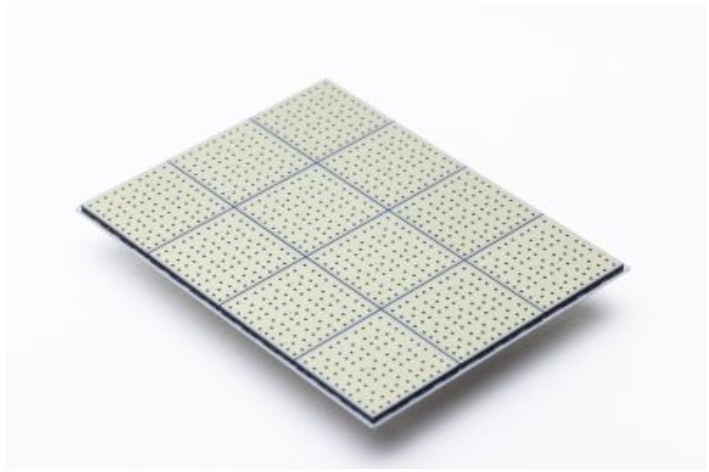
Cepheus-1-108Q triples the qubit and chiplet count of Rigetti's previous Cepheus-1-36Q system by interconnecting twelve 9-qubit chiplets into a single 108-qubit processor. It's a real validation of Rigetti's proprietary modular chiplet architecture and a meaningful step on the road to fault tolerance.
The system has achieved the following performance:
- 99.1% median two qubit gate fidelity
- 99.9% median single qubit gate fidelity
- ~60 ns gate speed
- CZ native gates for efficient error correction circuits
Rigetti has indicated they'll continue tuning fidelity and performance throughout 2026, so expect this device to keep getting better.
Why This Matters for qBraid Users
108 qubits opens the door to circuit depths and problem sizes that were impractical on smaller devices. A few of the workloads our community has been waiting for this kind of headroom on:
- Quantum error correction experiments that need enough physical qubits to encode meaningful logical qubits
- Deeper variational circuits for chemistry, materials, and optimization
- Larger scale benchmarking and noise characterization across modular architectures
- Algorithm research that scales beyond what 30 to 50 qubit devices can support
Because this is a direct integration, you can submit jobs to Cepheus-1-108Q from inside qBraid Lab using the same qbraid SDK workflow you already know. No new accounts, no separate cloud setup. Open a notebook, pick the device, run the circuit.
Saying Goodbye to Ankaa-3
With this new capability coming online, Rigetti's Ankaa™-3 is being retired from qBraid Lab. Ankaa-3 has been one of the most popular devices on the platform since we brought it online, powering everything from undergraduate course assignments and hackathon projects to serious research workloads across our 27,000+ developer community. It set a high bar for what an accessible superconducting device should feel like to use.
If you have active projects on Ankaa-3, here's what you need to know:
- Migration is straightforward. Cepheus-1-108Q uses the same Rigetti QCS® backend and gate set, so most circuits will port over with minimal changes.
- Watch your transpilation. With 108 qubits and a different connectivity graph, you may want to revisit qubit routing and mapping for circuits that were tightly tuned to Ankaa-3's topology.
- Need help porting? Reach out to the qBraid team and we'll get you sorted.
A genuine thank you to everyone who ran experiments on Ankaa-3. The data, papers, and student projects that came out of it are exactly why we keep pushing to bring more hardware to the community.
Getting Started
Cepheus-1-108Q is available now on qBraid Lab. To run your first circuit:
- Launch qBraid Lab and open a new notebook
- Select the Rigetti Cepheus-1-108Q device
- Build your circuit in your SDK of choice: pyQuil, Qiskit, Cirq and more, and submit jobs using the qBraid SDK
- ,Submit, monitor, and visualize results all in one place
The qBraid transpiler handles cross framework conversions, so you can write in whatever SDK your team prefers and target Cepheus-1-108Q without rewriting a thing.
Build With Us on GitHub
qBraid is open source, and we love seeing what the community builds. If you're working on a project that takes advantage of larger qubit systems like Cepheus-1-108Q, star us, file an issue, or open a PR: github.com/qBraid/qBraid. We're especially keen to see error correction prototypes, chiplet aware compilation tricks, and benchmarking results from the new device.




.png)







-min.jpeg)





.png)


