
4
Min read
By combining Nanoacademic’s specialized modeling software with qBraid’s established cloud-based platform, users will be able to access high-performance computational tools more easily within a bring your own license (BYOL) mode first.

Contents:
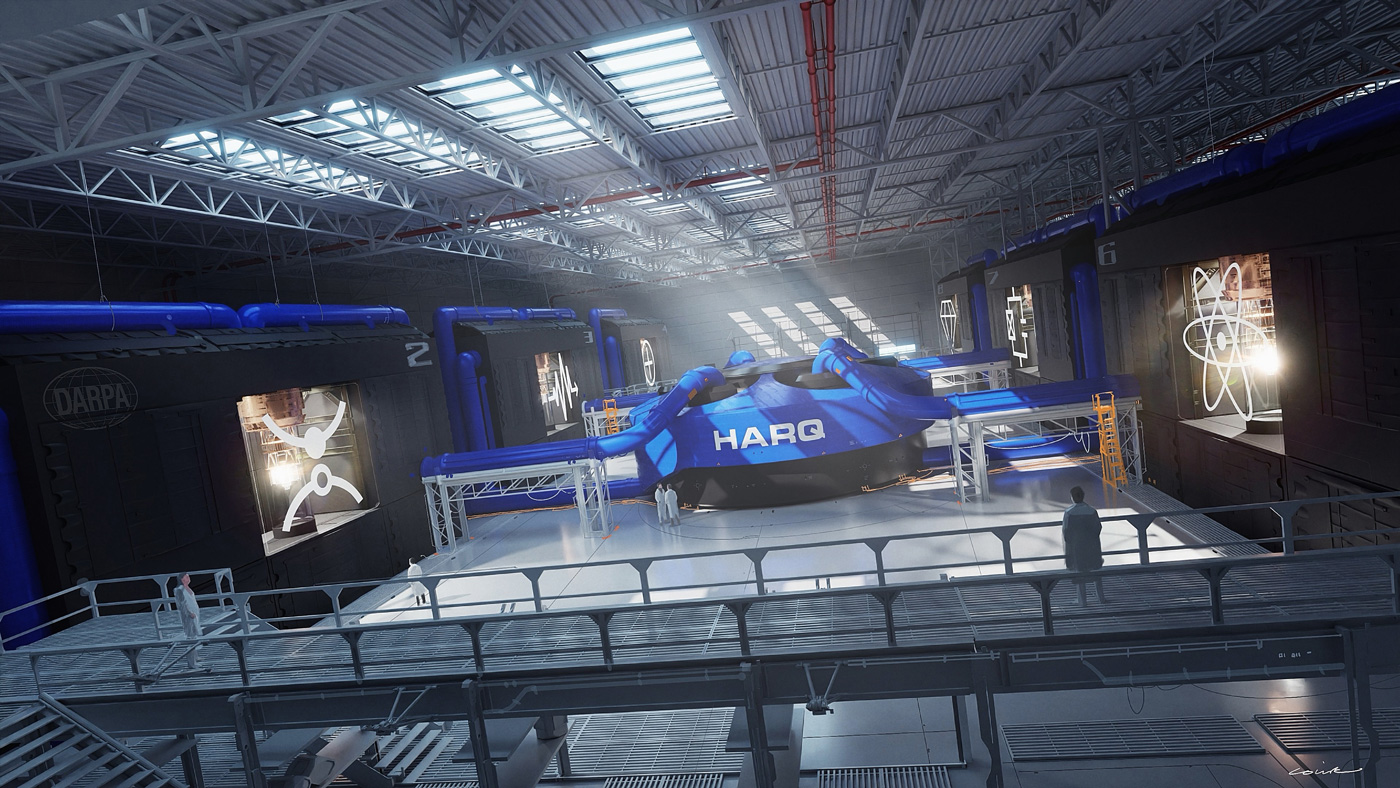
Chicago, IL – April 2026 – qBraid is proud to announce that we are part of a team selected by the Defense Advanced Research Projects Agency (DARPA) under its Heterogeneous Architectures for Quantum (HARQ) program. The effort is led by memQ, the Chicago-based industry leader in quantum networking for distributed quantum computing, and includes researchers from MIT, Yale, and the University of Chicago.
Most quantum computing systems today are built around a single qubit type expected to handle all functions: processing, memory, and communication. The challenge is that no qubit modality excels at all three. Superconducting qubits are fast but difficult to network at scale. Trapped ions offer long coherence times but slower gate speeds. Photonic qubits are well-suited for communication but harder to use for computation. Each modality has real strengths, and real limitations.
HARQ is designed to address this by taking a page from classical computing, where CPUs, GPUs, memory, and storage each serve distinct roles within a larger system. The program explores whether quantum architectures can take a similar approach: combining different qubit types, each optimized for specific tasks, connected by high-fidelity quantum interconnects, and managed by a compiler that can intelligently route and partition workloads across heterogeneous hardware. DARPA estimates this approach could reduce resource overhead by a factor of 1,000 compared to homogeneous architectures.
The program has two core technical areas: compiler tools that can assign quantum operations to the most suitable qubit type, and high-speed quantum interconnects that enable reliable communication between different modalities. A government-led architecture study will run in parallel to evaluate co-design decisions, scalability, and economic impact. HARQ sits within DARPA’s Microsystems Technology Office alongside related programs like the Quantum Benchmarking Initiative and QuANET.
Our role in this program is a natural extension of what qBraid has been building. qBraid was designed from the start to be hardware agnostic. Through qBraid, researchers and developers can access QPUs from IBM, Rigetti, QuEra, IonQ, Atom Computing, AQT, Microsoft, and others through a single interface, without rewriting their workflows for each new backend. We have spent years developing the software abstractions, transpilation layers, and execution infrastructure needed to run quantum workloads across a fragmented and fast-moving hardware landscape.
That foundation maps directly to what HARQ demands: a compiler that understands hardware topology and network constraints at both the logical and physical qubit level, and can partition and assign circuits across heterogeneous processors in a way that actually performs.
As our CEO Kanav Setia put it: “qBraid was founded to democratize quantum computing in order to drive both innovation and adoption across government and industry. Working with memQ and leading researchers from MIT, University of Chicago, and Yale fits perfectly with our mission and our platform.”
It is worth noting the geography here. memQ spun out of the University of Chicago, and both memQ and qBraid are alumni of the Duality Quantum Accelerator, the first accelerator in the U.S. dedicated exclusively to quantum startups. Chicago has been building one of the stronger quantum ecosystems in the country, anchored by the Chicago Quantum Exchange, the University of Chicago, Argonne National Laboratory, and a growing cluster of hardware and software companies. This DARPA selection reflects the depth of that ecosystem.
We will share more as the program develops. If you are a researcher, developer, or organization working on quantum software, hardware integration, or next-generation quantum architectures, we want to hear from you.
Explore qBraid at qbraid.com and join our open source developer community on GitHub. 👉 github.com/qBraid/qBraid

4
Min read
By combining Nanoacademic’s specialized modeling software with qBraid’s established cloud-based platform, users will be able to access high-performance computational tools more easily within a bring your own license (BYOL) mode first.
Press Releases
3 minutes
Min read
qBraid Launches QUEST to Bring Real Quantum Hardware Into Classrooms at 40 Universities

Research
5
Min read
qBraid partnered with Google Cloud's AlphaEvolve to tackle one of the most difficult optimization problems in quantum chemistry: finding more efficient fermion-to-qubit encodings that enable fault-tolerant quantum simulations of molecules.
.png)
Collaborations
4 min read
Min read
qBraid is now a cloud target in NVIDIA CUDA-Q enabling direct access to backends available on qBraid via CUDA-Q's programming interface

Collaborations
4
Min read
qBraid is selected for the National Quantum Algorithm Center Grand Challenges Award alongside Professor Bryan Clark at UIUC and BP to benchmark quantum chemistry algorithms on industrially relevant molecules.
Collaborations
3
Min read
Kvantify Qrunch is now live on qBraid Lab, giving our 27,000+ developers access to production-grade quantum chemistry workflows and five ready-to-run tutorials spanning batteries, carbon capture, drug discovery, and enzyme catalysis.
Collaborations
4
Min read
qBraid is proud to announce we are part of a DARPA-selected team led by memQ to develop a hardware and network-aware quantum compiler under the HARQ program, alongside researchers from MIT, Yale, and the University of Chicago.
.png)
Collaborations
2
Min read
Loom, the quantum error correction library from Entropica Labs, is now available on the updated qBraid Lab Explore page.

Collaborations
3
Min read
qBraid Pilots is now available on AWS Marketplace, giving enterprises a familiar procurement path to access expert-guided quantum algorithm development powered by Amazon Braket.

Collaborations
2
Min read
Access AQT’s IBEX Q1 on qBraid Lab, enabling researchers and developers to run experiments on fully connected trapped ion quantum hardware

Collaborations
3
Min read
qBraid is proud to return as the official compute platform for the 2026 Connected DMV Global Industry Challenge, announced at CES 2026 in Las Vegas.

Collaborations
3 minutes
Min read
qBraid has been selected by IBM to host their annual Qiskit Global Summer School for the second year in a row.

Collaborations
5
Min read
As an early adopter of the NVIDIA GH200 Grace Hopper Superchip systems, qBraid provides unparalleled access to today’s most advanced computing technologies.

Collaborations
1
Min read
Explore the advantages of cloud-based quantum computing and how it is revolutionizing research and development across various industries

Collaborations
1
Min read
Discover how quantum computing is revolutionizing enterprises, from enhancing cybersecurity with quantum encryption to optimizing complex logistics and supply chain operations.

Collaborations
5
Min read
qBraid’s quantum computing platform adds access to 256 qubit neutral atom quantum computer, Aquila by QuEra.

Collaborations
5
Min read
qBraid and Quantum Algorithms Institute partner to accelerate the pace of quantum computing in British Columbia and beyond.

Collaborations
4
Min read
The qBraid platform will allow users to play with Pulser in a matter of a few minutes.
Hackathons
3
Min read
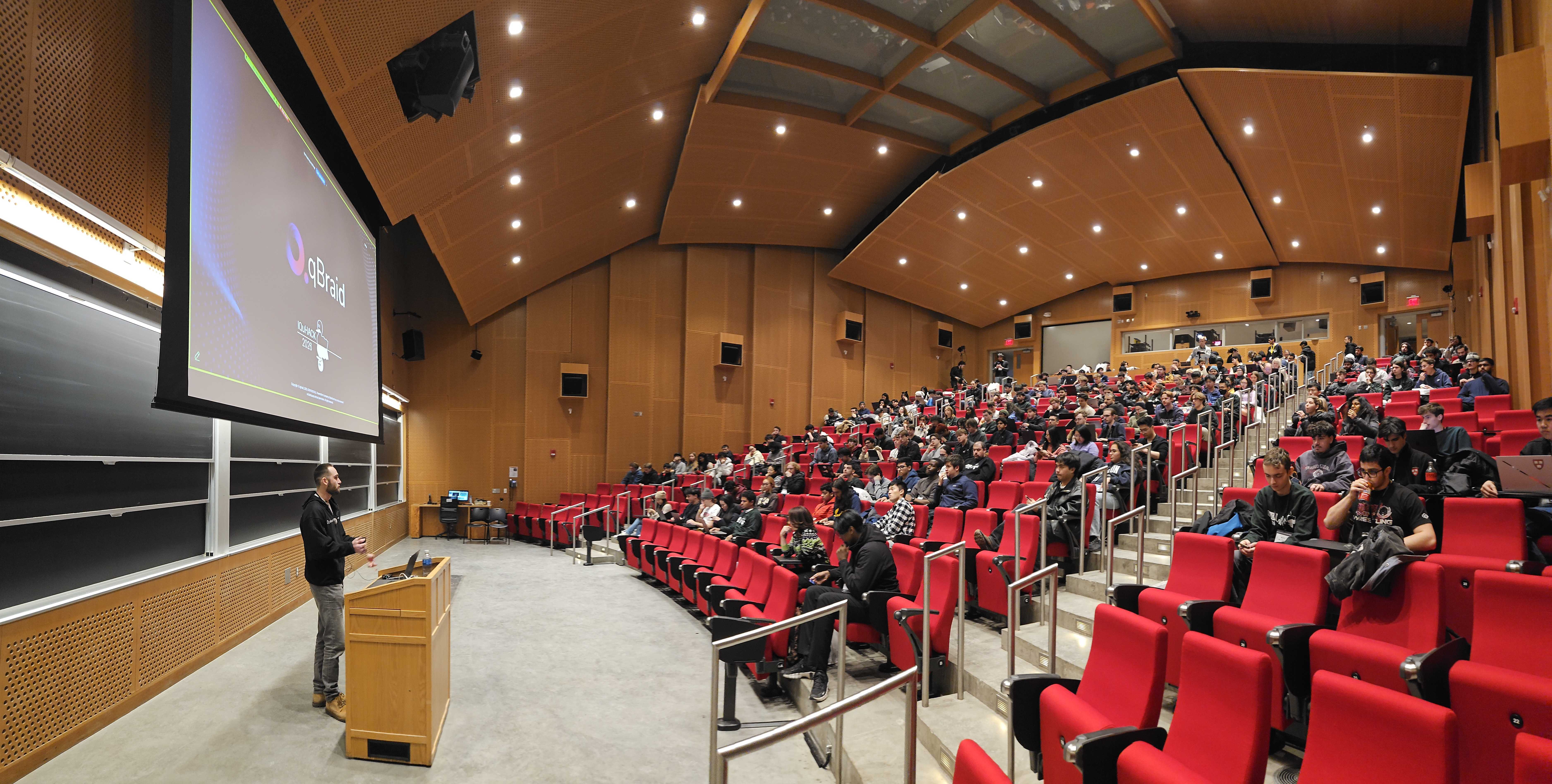
qBraid served as the official platform for iQuHACK 2026, MIT's 7th annual quantum hackathon, powering 1,400+ participants across 76 countries for the 5th consecutive year.

Hackathons
5
Min read
As part of QHack, qBraid is providing the best quantum developer notebook environment experience for challengers.

Hackathons
10
Min read
From October 21st to November 5th of 2022, qBraid hosted HAQS, one of the most popular quantum computing events of the year, where participants from around the world worked on solving a total of five quantum computing challenges during the two weeks of the event.

Hackathons
5
Min read
At this year's QCHack, participants attended a week filled with amazing talks, 1:1 sessions with academic and industry mentors, and a 24 hour hackathon hosted by Stanford, Yale and Berkeley.
-min.jpeg)
Hackathons
4
Min read
The potential of the field of quantum computing is so huge that everyone in the field cannot wait for all the promises that the field holds to become a reality.
Research
5
Min read
qBraid partnered with Google Cloud's AlphaEvolve to tackle one of the most difficult optimization problems in quantum chemistry: finding more efficient fermion-to-qubit encodings that enable fault-tolerant quantum simulations of molecules.

Research
4
Min read
qBraid researchers Tarini Hardikar and James Brown presented four talks at the APS Global Physics Summit 2026 in Denver, spanning molecular simulation, quantum education, and aerospace applications.

Research
5
Min read
IEEE has awarded qBraid and its collaborators 1st place for the Best Paper Award in the Quantum Algorithm Track.

Research
1
Min read
qBraid's team used hybrid classical-quantum algorithms to determine the best flight path

Research
1
Min read
Learn how classical sampling methods, such as Markov Chain Monte Carlo, can estimate truncation errors in simulating bosons on quantum computers, aiding resource assessment and result validation for quantum simulations, including applications in two-dimensional lattice scalar field theory.
Press Releases
3 minutes
Min read
qBraid Launches QUEST to Bring Real Quantum Hardware Into Classrooms at 40 Universities

Press Releases
3
Min read
MIT News featured qBraid as a startup providing a nontechnical gateway to coding on quantum computers, highlighting the platform's mission to democratize access to quantum hardware and software worldwide.

Press Releases
2
Min read
qBraid wins NSF POSE grant to build open source ecosystem

Press Releases
10
Min read
qBraid and NVIDIA CUDA-Q are removing the two biggest blockers to AI4Quantum research

Press Releases
8
Min read
Our first cohort of the qBraid Alliance, a partnership with student organizations at leading universities around the country.

Press Releases
5
Min read
Coming from IBM Quantum Lab? Learn how to start using qBraid Lab

Press Releases
10
Min read
The Bloch develops quantum technology solutions for society’s most pressing problems by accelerating industry adoption to drive research commercialization, catapulting US leadership in quantum information science and technology.

Press Releases
5
Min read
Our newest podcast series

Press Releases
5
Min read
qBraid will lead a team of researchers from MIT, UChicago, Argonne National Laboratory, and QuEra to develop quantum computing solutions for studying the interaction of metals and intrinsically disordered proteins.

Press Releases
Min read
OSU uses qBraid for accessing Intel Quantum SDK

Press Releases
5
Min read
qBraid provides agnostic connections to quantum computers and simulators thanks to Amazon Braket

Press Releases
10
Min read
Duality Quantum Accelerator Accepts Six Startups into Inaugural Cohort

Press Releases
1
Min read
Take the QuBes (Quantum Beginners) course to learn quantum computing.

Press Releases
5
Min read
qBraid aims to increase accessibility to, and interoperability amongst, quantum computing resources.
Product
3 min read
Min read
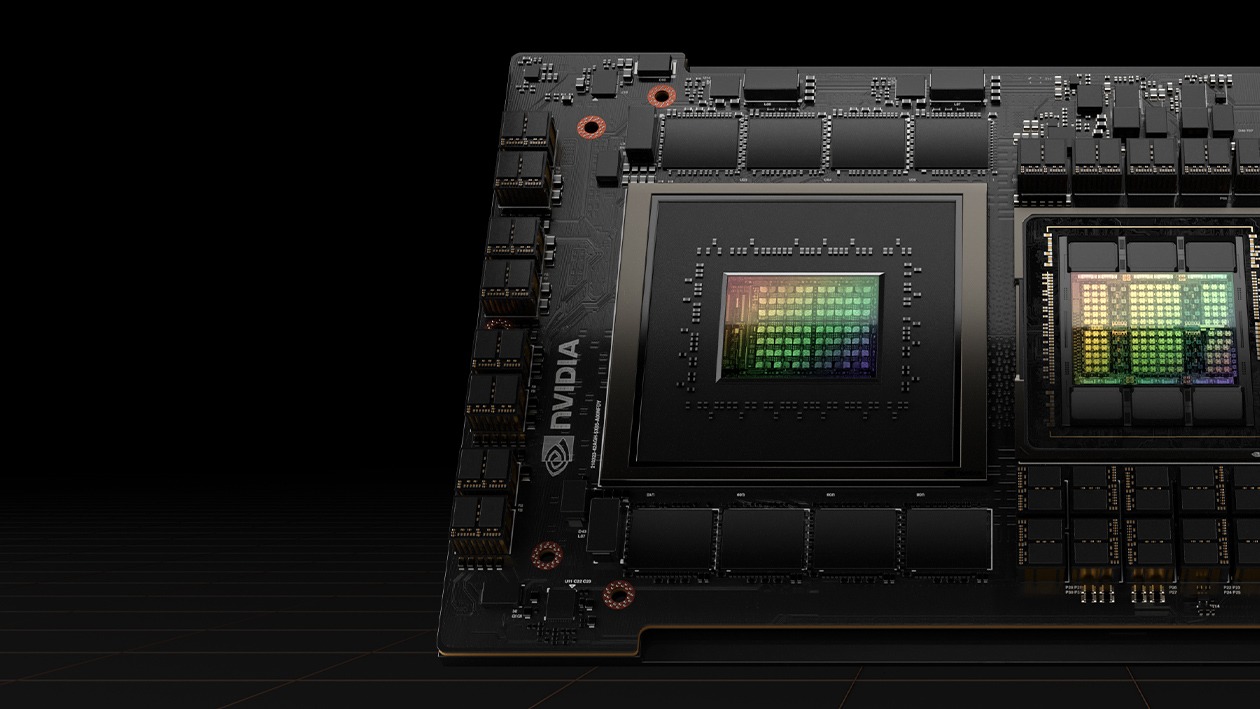
qBraid Lab now offers on-demand access to 20+ GPU instance types across NVIDIA's Blackwell, Hopper, Ampere, and Ada Lovelace architectures, with pay-as-you-go pricing and zero infrastructure to manage.
Product
3 min read
Min read
Rigetti's Cepheus-1-108Q, the largest modular quantum system in the industry, is now available to qBraid Lab users via direct integration.
Product
3 minutes
Min read
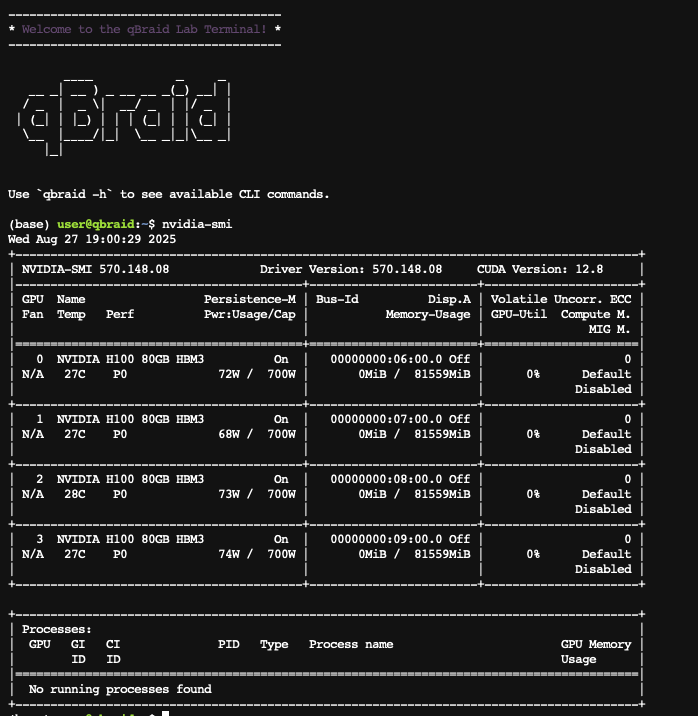
Supercharge your quantum workflows with GPUs on qBraid
.png)
Product
5
Min read
We are pleased to have presented qBraid’s Platform-Agnostic Open-Source Tools at the Quantum Computing Devroom in FOSDEM 2025.

Product
5
Min read
Accelerating hybrid workflows using Pennylane's embedded simulators with NVIDIA GPUs on qBraid Lab.

Product
5
Min read
Here are 3 ways to install python packages on qBraid

Product
2
Min read
How to install Cirq v1.2.0 environment on qBraid Lab

Product
1
Min read
Let qBraid help you take your first step into the quantum world!

Product
1
Min read
Intel® Quantum SDK is generally available on qBraid Lab for Free with no installation necessary

Product
1
Min read
Dive into the intricate interplay of the Bernoulli line and the Bloch sphere, revealing profound geometric insights into quantum state dynamics.


