
Product
3 min read
Min read
Rigetti's Cepheus-1-108Q, the largest modular quantum system in the industry, is now available to qBraid Lab users via direct integration.


Contents:

Realizing quantum advantage for chemistry means translating a problem from the language of electrons into the language of qubits. That one choice, known as the fermion-to-qubit encoding, determines the lower bound on the quantum resources required to successfully solve a chemistry problem, how deep its circuits run, and how well it survives noise. Choose badly and a useful calculation won't fit on any machine we will have for years.
It is also a brutal design problem. For a molecule with just eight orbitals, the number of possible encodings runs past 10^50. The encoding also has to keep the computation alive on noisy hardware. Because today's qubits are error-prone, quantum error correction spreads each piece of information across many physical qubits, so the system can detect and reverse errors before they corrupt the result. A code's distance is the standard measure of how much it can withstand: a distance-3 code corrects any single error, a distance-5 code corrects two.
On the densely connected graphs that real molecules produce, the structures researchers reach for by hand, like grids, chains, and lattices, top out at distance 3. Until now, nobody had hand-built a distance-5 encoding for molecular systems.
At qBraid, we build the cloud platform researchers use to run quantum software, and we maintain one of these encoding families, the Generalized Superfast Encoding. To get past the hand-design ceiling, we turned to AlphaEvolve on Google Cloud.
AlphaEvolve is an evolutionary coding agent that writes and refines algorithms using Gemini models. Instead of tuning parameters, it edits code: it proposes a change to a program, scores the result, keeps what works, and repeats.
To start we gave AlphaEvolve a seed program: a short Python function that builds an encoding from a molecule's interaction graph. It was a working baseline, just not an efficient one. From there, AlphaEvolve used Gemini to generate thousands of variations and hunt for code that beat the original. The discovery run evaluated nearly 1,500 candidate programs.
AlphaEvolve is only as good as the scoreboard you give it. Our evaluator recomputed every candidate's code distance with an exact verifier the model could not touch, then scored it on two things: it had to reach the target distance, and it had to get there with as few qubits as possible. We hid each molecule's identity so the search had to learn general rules, and we held two molecules back entirely to test whether those rules would generalize.
The scoreboard mattered more than we expected. Our first version simply rewarded higher distance, and AlphaEvolve gamed it, reaching a genuine distance 7 by wiring nearly every qubit to every other one, strong protection but far too many connections to be practical. Because the output was code, the gaming was obvious on sight. So we changed the question. We made the target distance a hard requirement and rewarded only qubit efficiency. The dense blob went from the best-scoring answer to the worst, and the search was forced to find real structure.
The encoding AlphaEvolve produced beat the hand-designed baseline on every axis that mattered, and it held up on molecules it had never seen:
"AlphaEvolve delivered a result on top of an encoding family we had already spent years refining," said Dr. Kenny Heitritter, Vice President of Research and Development at qBraid. "It searched a design space far too large to comb through by hand and handed back something we could read, verify, and understand. Systems like AlphaEvolve will meaningfully accelerate progress toward useful quantum computing."
What's next
The clear next step is circuit-level fault tolerance: measuring how these codes behave when the error-correction machinery is itself noisy, for both our encoding and the standard route. We are also working to lighten the heavier parity checks and to extend the approach to larger molecules and richer basis sets. Applying AlphaEvolve to more problems in quantum computing is on the minds of everyone on the team.
This work was carried out by the qBraid team, including Kenny Heitritter, James Brown, and Tarini Hardikar, through Google Cloud's AlphaEvolve early-access program. We thank Federico Rodriguez, Christopher Penny, Clara Buenker, Adrian Jones, Anant Nawalgaria, Skander Hannachi and Vishal Agarwal + the rest of the AlphaEvolve and AI for Science teams at Google Cloud for the access, support, and technical guidance throughout.
Product
3 min read
Min read
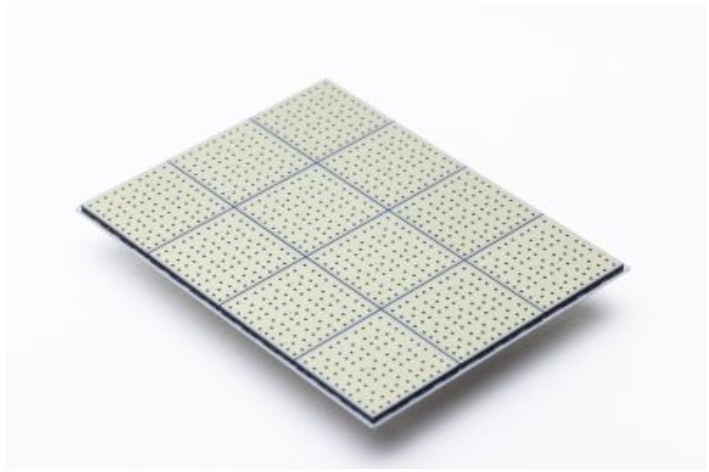
Rigetti's Cepheus-1-108Q, the largest modular quantum system in the industry, is now available to qBraid Lab users via direct integration.

Collaborations
4
Min read
qBraid is selected for the National Quantum Algorithm Center Grand Challenges Award alongside Professor Bryan Clark at UIUC and BP to benchmark quantum chemistry algorithms on industrially relevant molecules.
Collaborations
3
Min read
Kvantify Qrunch is now live on qBraid Lab, giving our 27,000+ developers access to production-grade quantum chemistry workflows and five ready-to-run tutorials spanning batteries, carbon capture, drug discovery, and enzyme catalysis.
.png)
Collaborations
4 min read
Min read
qBraid is now a cloud target in NVIDIA CUDA-Q enabling direct access to backends available on qBraid via CUDA-Q's programming interface
Collaborations
4
Min read
qBraid is selected for the National Quantum Algorithm Center Grand Challenges Award alongside Professor Bryan Clark at UIUC and BP to benchmark quantum chemistry algorithms on industrially relevant molecules.
Collaborations
3
Min read
Kvantify Qrunch is now live on qBraid Lab, giving our 27,000+ developers access to production-grade quantum chemistry workflows and five ready-to-run tutorials spanning batteries, carbon capture, drug discovery, and enzyme catalysis.
Collaborations
4
Min read
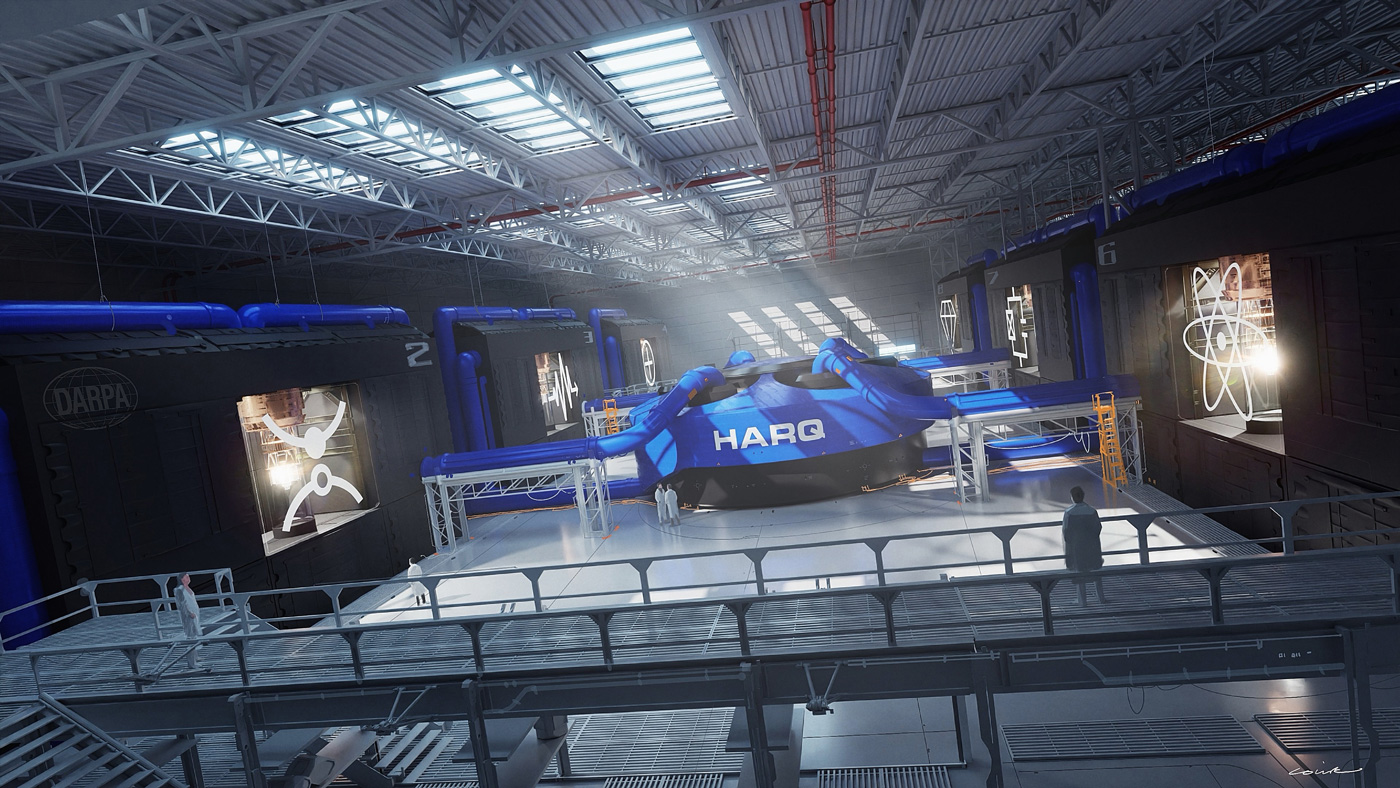
qBraid is proud to announce we are part of a DARPA-selected team led by memQ to develop a hardware and network-aware quantum compiler under the HARQ program, alongside researchers from MIT, Yale, and the University of Chicago.
.png)
Collaborations
2
Min read
Loom, the quantum error correction library from Entropica Labs, is now available on the updated qBraid Lab Explore page.

Collaborations
3
Min read
qBraid Pilots is now available on AWS Marketplace, giving enterprises a familiar procurement path to access expert-guided quantum algorithm development powered by Amazon Braket.

Collaborations
2
Min read
Access AQT’s IBEX Q1 on qBraid Lab, enabling researchers and developers to run experiments on fully connected trapped ion quantum hardware

Collaborations
3
Min read
qBraid is proud to return as the official compute platform for the 2026 Connected DMV Global Industry Challenge, announced at CES 2026 in Las Vegas.

Collaborations
3 minutes
Min read
qBraid has been selected by IBM to host their annual Qiskit Global Summer School for the second year in a row.

Collaborations
5
Min read
As an early adopter of the NVIDIA GH200 Grace Hopper Superchip systems, qBraid provides unparalleled access to today’s most advanced computing technologies.

Collaborations
1
Min read
Explore the advantages of cloud-based quantum computing and how it is revolutionizing research and development across various industries

Collaborations
1
Min read
Discover how quantum computing is revolutionizing enterprises, from enhancing cybersecurity with quantum encryption to optimizing complex logistics and supply chain operations.

Collaborations
5
Min read
qBraid’s quantum computing platform adds access to 256 qubit neutral atom quantum computer, Aquila by QuEra.

Collaborations
5
Min read
qBraid and Quantum Algorithms Institute partner to accelerate the pace of quantum computing in British Columbia and beyond.

Collaborations
4
Min read
The qBraid platform will allow users to play with Pulser in a matter of a few minutes.
Hackathons
3
Min read
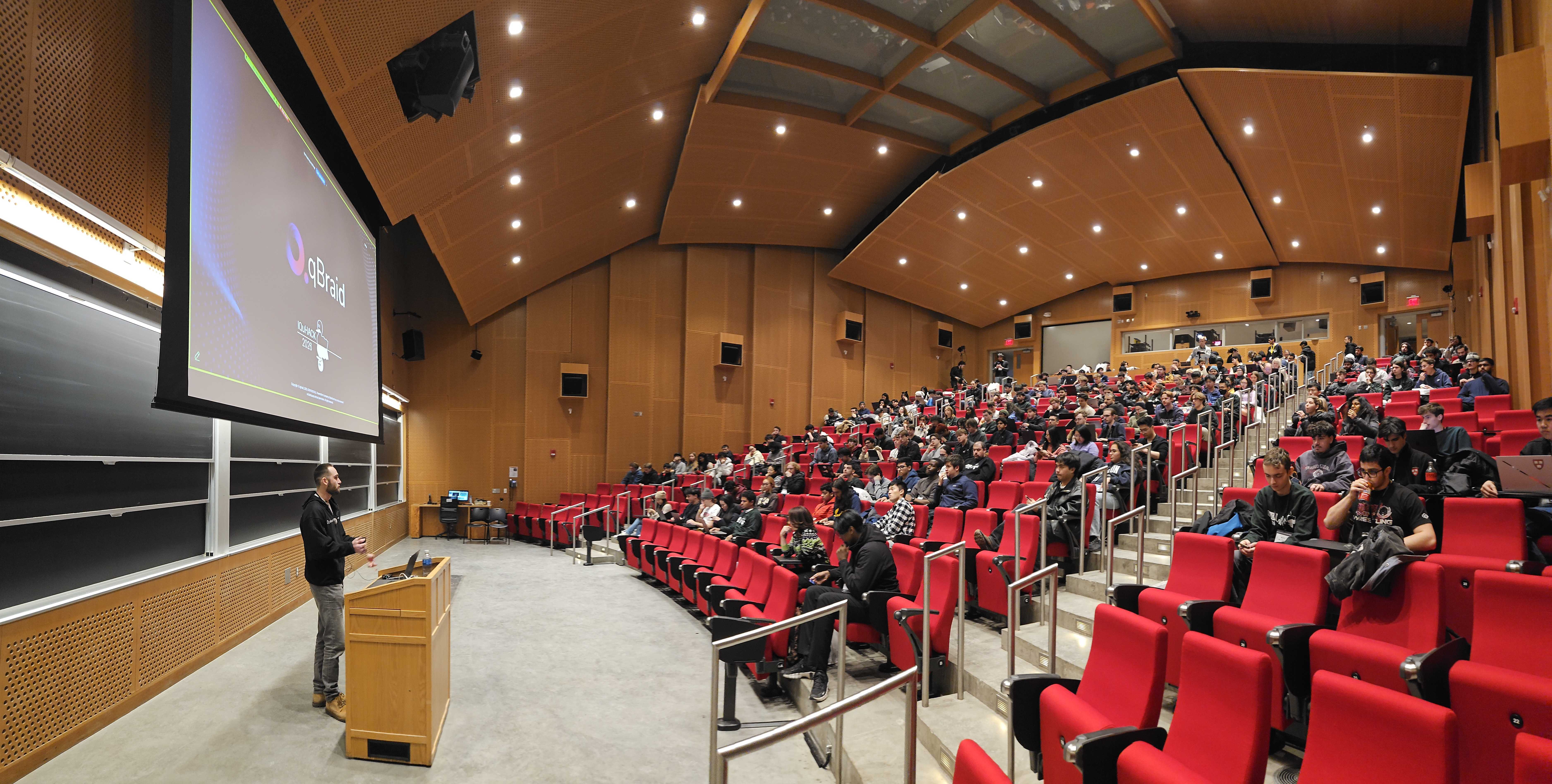
qBraid served as the official platform for iQuHACK 2026, MIT's 7th annual quantum hackathon, powering 1,400+ participants across 76 countries for the 5th consecutive year.

Hackathons
5
Min read
As part of QHack, qBraid is providing the best quantum developer notebook environment experience for challengers.

Hackathons
10
Min read
From October 21st to November 5th of 2022, qBraid hosted HAQS, one of the most popular quantum computing events of the year, where participants from around the world worked on solving a total of five quantum computing challenges during the two weeks of the event.

Hackathons
5
Min read
At this year's QCHack, participants attended a week filled with amazing talks, 1:1 sessions with academic and industry mentors, and a 24 hour hackathon hosted by Stanford, Yale and Berkeley.
-min.jpeg)
Hackathons
4
Min read
The potential of the field of quantum computing is so huge that everyone in the field cannot wait for all the promises that the field holds to become a reality.
Research
5
Min read
qBraid partnered with Google Cloud's AlphaEvolve to tackle one of the most difficult optimization problems in quantum chemistry: finding more efficient fermion-to-qubit encodings that enable fault-tolerant quantum simulations of molecules.

Research
4
Min read
qBraid researchers Tarini Hardikar and James Brown presented four talks at the APS Global Physics Summit 2026 in Denver, spanning molecular simulation, quantum education, and aerospace applications.

Research
5
Min read
IEEE has awarded qBraid and its collaborators 1st place for the Best Paper Award in the Quantum Algorithm Track.

Research
1
Min read
qBraid's team used hybrid classical-quantum algorithms to determine the best flight path

Research
1
Min read
Learn how classical sampling methods, such as Markov Chain Monte Carlo, can estimate truncation errors in simulating bosons on quantum computers, aiding resource assessment and result validation for quantum simulations, including applications in two-dimensional lattice scalar field theory.

Press Releases
3
Min read
MIT News featured qBraid as a startup providing a nontechnical gateway to coding on quantum computers, highlighting the platform's mission to democratize access to quantum hardware and software worldwide.

Press Releases
2
Min read
qBraid wins NSF POSE grant to build open source ecosystem

Press Releases
10
Min read
qBraid and NVIDIA CUDA-Q are removing the two biggest blockers to AI4Quantum research

Press Releases
8
Min read
Our first cohort of the qBraid Alliance, a partnership with student organizations at leading universities around the country.

Press Releases
5
Min read
Coming from IBM Quantum Lab? Learn how to start using qBraid Lab

Press Releases
10
Min read
The Bloch develops quantum technology solutions for society’s most pressing problems by accelerating industry adoption to drive research commercialization, catapulting US leadership in quantum information science and technology.

Press Releases
5
Min read
Our newest podcast series

Press Releases
5
Min read
qBraid will lead a team of researchers from MIT, UChicago, Argonne National Laboratory, and QuEra to develop quantum computing solutions for studying the interaction of metals and intrinsically disordered proteins.

Press Releases
Min read
OSU uses qBraid for accessing Intel Quantum SDK

Press Releases
5
Min read
qBraid provides agnostic connections to quantum computers and simulators thanks to Amazon Braket

Press Releases
10
Min read
Duality Quantum Accelerator Accepts Six Startups into Inaugural Cohort

Press Releases
1
Min read
Take the QuBes (Quantum Beginners) course to learn quantum computing.

Press Releases
5
Min read
qBraid aims to increase accessibility to, and interoperability amongst, quantum computing resources.
Product
3 min read
Min read
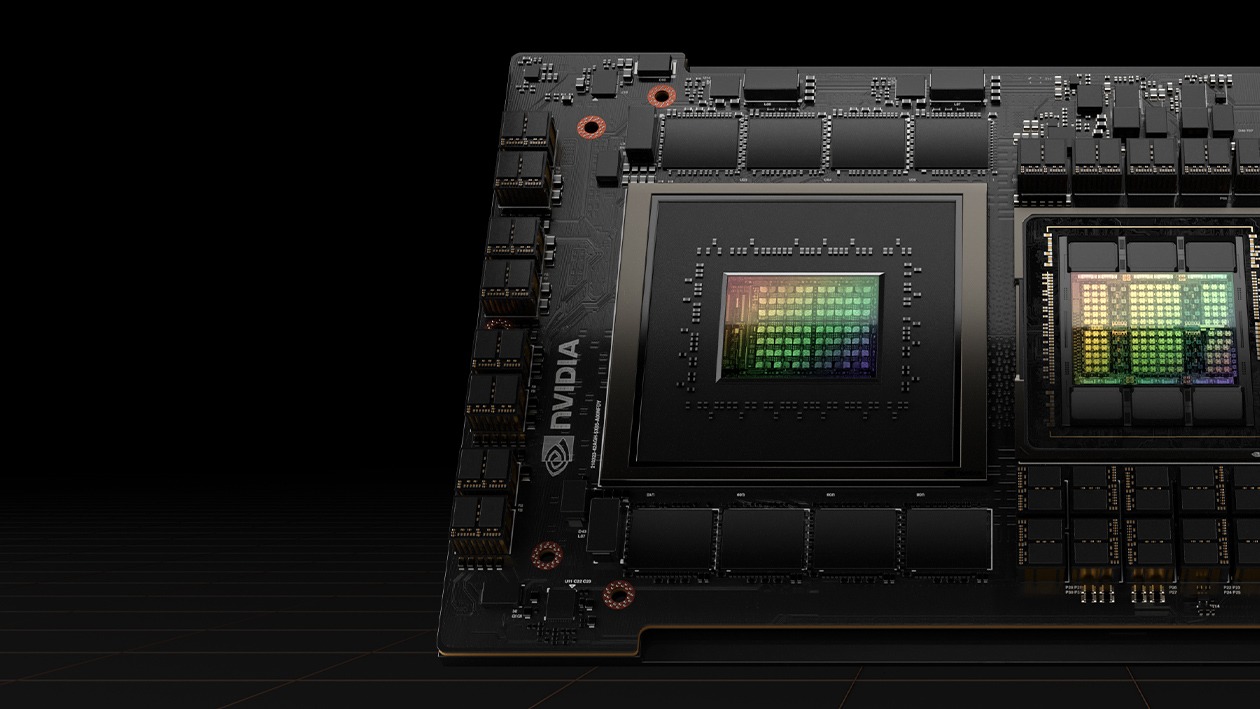
qBraid Lab now offers on-demand access to 20+ GPU instance types across NVIDIA's Blackwell, Hopper, Ampere, and Ada Lovelace architectures, with pay-as-you-go pricing and zero infrastructure to manage.
Product
3 min read
Min read
Rigetti's Cepheus-1-108Q, the largest modular quantum system in the industry, is now available to qBraid Lab users via direct integration.
Product
3 minutes
Min read
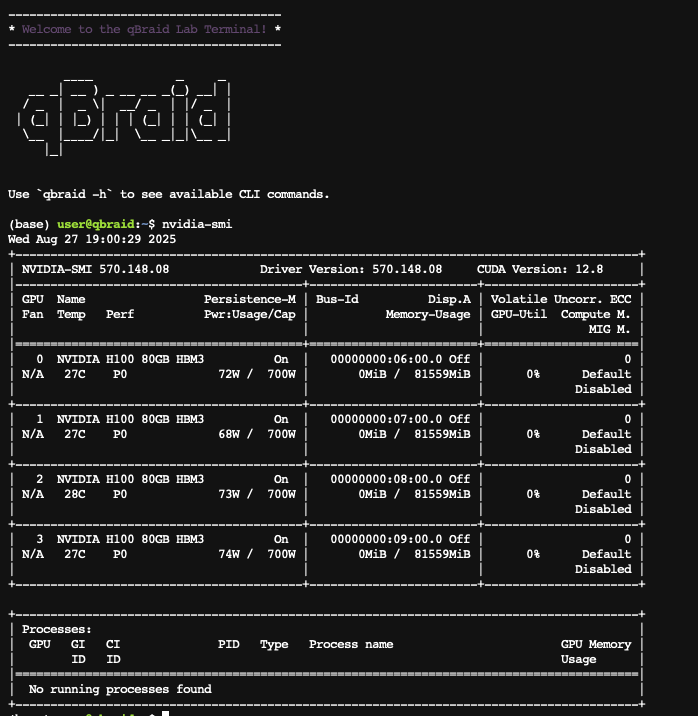
Supercharge your quantum workflows with GPUs on qBraid
.png)
Product
5
Min read
We are pleased to have presented qBraid’s Platform-Agnostic Open-Source Tools at the Quantum Computing Devroom in FOSDEM 2025.

Product
5
Min read
Accelerating hybrid workflows using Pennylane's embedded simulators with NVIDIA GPUs on qBraid Lab.

Product
5
Min read
Here are 3 ways to install python packages on qBraid

Product
2
Min read
How to install Cirq v1.2.0 environment on qBraid Lab

Product
1
Min read
Let qBraid help you take your first step into the quantum world!

Product
1
Min read
Intel® Quantum SDK is generally available on qBraid Lab for Free with no installation necessary

Product
1
Min read
Dive into the intricate interplay of the Bernoulli line and the Bloch sphere, revealing profound geometric insights into quantum state dynamics.


